How to Read a Mineral Specimen Label: Hardness, Locality, and Treatments
A specimen label is small — a slip of paper, an index card, a printed tag in a plastic sleeve — and easy to skim past on the way to the crystal itself. That is a mistake. Those few lines record what the piece is, where it came from, how hard it is, and whether anyone altered it before it reached the shelf. Read them properly and you know how to handle the specimen, whether the asking price fits the material, and how much of that glossy finish is genuinely natural. Learning to read a label properly takes an afternoon. It saves years of buying badly and breaking good things.
What Belongs on a Label
Every label worth keeping answers the same five questions: what is it, where did it come from, how big is it, what has happened to it, and who has owned it. When one of those is missing, you are buying a story rather than a specimen.
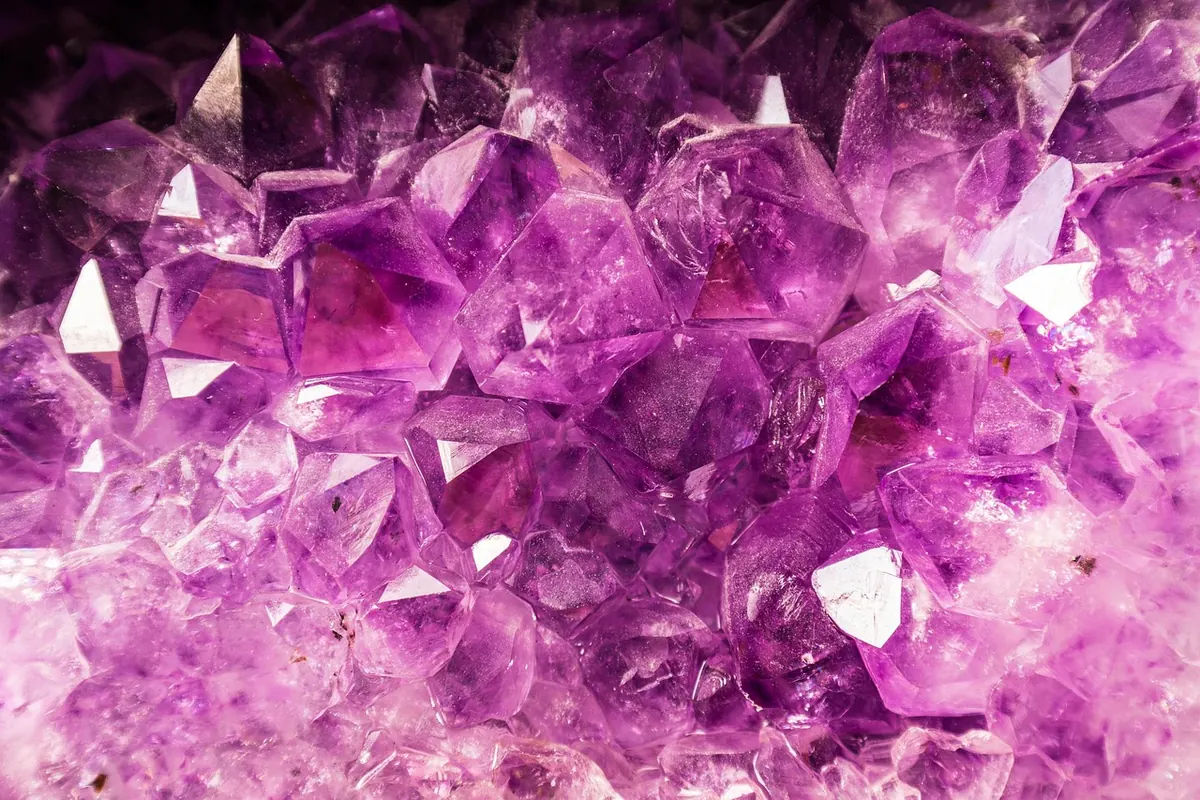
Species and variety come first, and careful dealers keep them separate. "Quartz, variety amethyst" is precise; "amethyst" alone is a trade word, not a mineral name. The same applies to "garnet," which covers a family of species with different chemistry, and to "apatite," which in a good catalogue becomes fluorapatite or chlorapatite.
Next comes the locality line, then the physical description: dimensions, weight, matrix, associated species, and condition. The best labels also carry provenance — a named old collection, a catalogue number, a find date. "Tsumeb, Namibia, ex. a European private collection, acquired 1987" describes a different object from one that simply reads "Africa." A date is not decoration. It helps pin the specimen to a known find, an old collection, or at least a period before a particular treatment became common.
A good label is also internally consistent. If the card says "fluorite" but the hardness note suggests the piece scratches glass, something is wrong. If the locality says "Rogerley Mine" and the specimen is a purple octahedron rather than a green cube, ask why. Labels are written by people, and people make mistakes. The point is not to distrust every card, but to read it as a set of claims that should fit together.
Hardness: The Number That Predicts Damage
Mohs hardness is a ranking, not a measurement. Talc sits at 1, diamond at 10, and the intervals between them are wildly uneven: corundum at 9 is far harder than topaz at 8, even though the numbers sit side by side. What matters at home is where a species falls relative to everyday materials. A fingernail is about 2.5, a copper coin around 3.5, a steel blade and window glass near 5.5.
A quartz point at 7 will scratch glass and, more importantly, will scratch most other minerals in your collection. Calcite at 3 can be marked by a coin and cut by a knife; gypsum at 2 can be scratched with a fingernail. Fluorite at 4 takes a knife mark and cleaves in four directions, which is why a bumped fluorite cube so often shows a clean diagonal slice. Halite at 2.5 is soft enough to scratch with a fingernail and soluble enough that a damp cloth can do real damage. Apatite at 5 sits close to glass and steel, so it can look tougher than it is and still bruise against a harder neighbour.
- Keep species below 5 in a closed box or a lidded tray. Dust contains quartz grit, and grit abrades soft surfaces every time you wipe them.
- Never dust a soft specimen with a cloth you have used on quartz, or with a brush that has been sitting open on a shelf.
- Hardness is not toughness. Diamond is the hardest mineral and still chips; fluorite is brittle as well as soft.
- Handle high-hardness pieces over a padded surface, not over tile or stone, and keep them away from softer neighbours in storage.
- Think about the matrix as well as the specimen. A soft crystal on a hard quartz matrix can be scratched by its own base during handling.
Hardness also tells you how to clean. For a species at 3 or below, skip the cloth and use an air puffer or a very soft brush. For a piece that is both soft and water-soluble, such as halite, avoid water altogether. The label's hardness line is not academic; it is a handling instruction.
Locality: Why "Brazil" Is Not Enough
Locality is written from large to small: country, state or province, district, mine or quarry, level, pocket, and date if it is known. "Fluorite, Rogerley Mine, Weardale, County Durham, England" tells you a great deal — green cubes from that mine are known for shifting colour in daylight, and the label tells you what to look for. "Fluorite, China" tells you almost nothing: several provinces produce it, in several habits, at very different levels of quality.
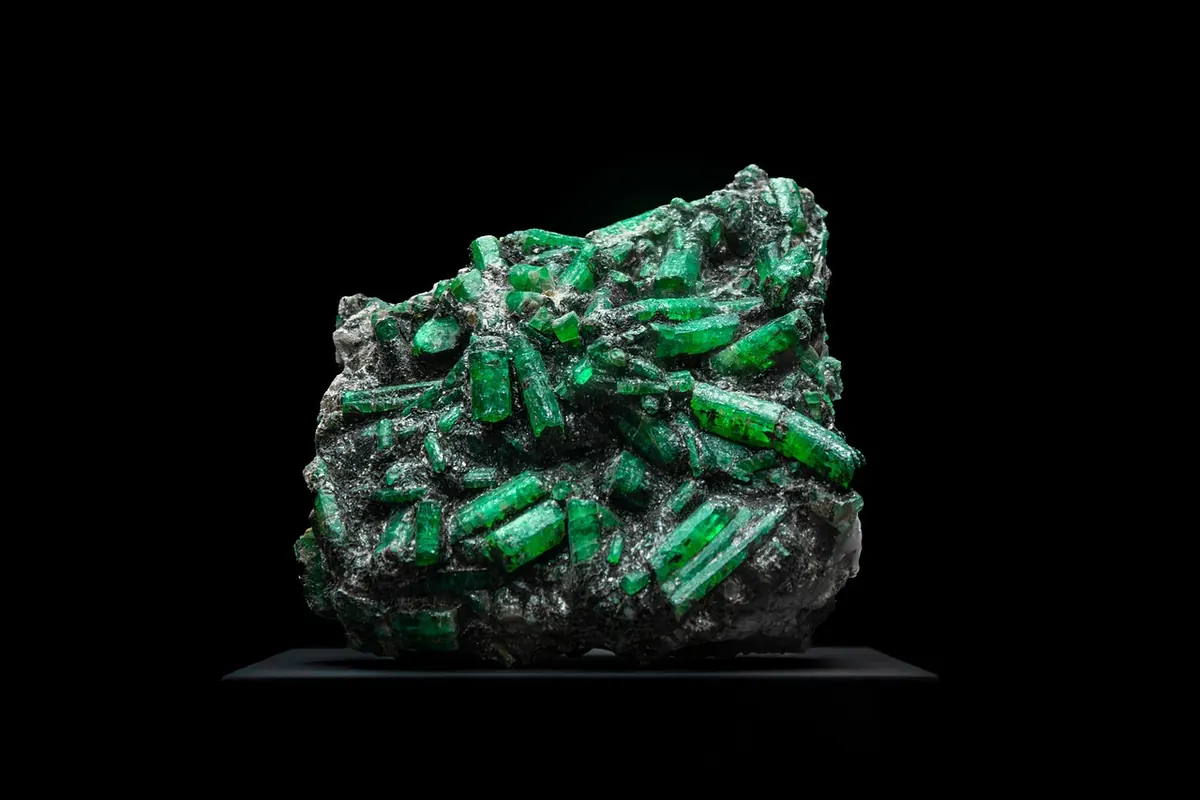
Locality is not just romance. It predicts colour, crystal habit, associations, and how the piece should be stored. It also drives price, because material from a documented, well-known find can be verified and recognised. A Dalnegorsk fluorite, an Elba tourmaline, or a Muzo emerald carries expectations that a country-level label cannot support. Vague origins — "Africa," "Brazil," "Morocco" — usually mean the exact pit was never recorded, or was deliberately blurred for commercial reasons. A country-level label can still be honest if that is genuinely all that was known, but it should be priced as decorative material, not as documented material.
Remember that labels get copied. A mistake written down in 1975 can still be travelling on a card today, generation after generation of dealers each trusting the last. Provenance to a known collection is your best protection, though even museum labels are occasionally wrong. Treat an old label as evidence, not proof.
Treatments, Repairs, and the Word "Natural"
Treatment is normal in the mineral trade and not automatically deceptive. What matters is disclosure. An honestly described treated specimen is a fair purchase; a specimen sold as natural should be able to survive a direct question.
- Heating. A large share of the citrine on the market is amethyst that has been heated to shift the colour toward yellow-orange.
- Irradiation. Used to deepen colour in quartz and spodumene, and to turn colourless topaz blue.
- Dyeing. Common on agate slices, and on howlite sold as a turquoise substitute.
- Stabilization and filling. Turquoise is routinely stabilized with resin; emerald is commonly filled with oil or resin to hide fractures.
- Coating. "Aura" quartz carries a vapour-deposited metal film. The colour sits on the surface and can wear or flake.
- Repair and reconstruction. Glued breaks, clusters reattached to matrix, composite pieces built from several specimens, and plaster or resin bases under large amethyst cathedrals.
Ask these four questions before you commit, and listen for hesitation as carefully as for the answer:
- Has this piece been heated, irradiated, dyed, filled, or coated?
- Is any part of it repaired or reattached, including the base?
- Is the locality as specific as the seller claims, and can they explain how it was determined?
- What is the condition report, and does it mention chips, cleaves, or stabilization of the matrix?
"Natural" is not a grading term. It is a claim about history, and like any claim about history it needs evidence.
Be equally precise about cleaning. A specimen that has been washed with acid to remove iron staining is usually described as cleaned, not treated, but the distinction matters. Acid cleaning can dull a surface or remove a natural coating. Trimming is another grey area: a piece cut from a larger pocket is legitimate, but it should not be presented as if it grew that way.
Condition, Size, and Matrix
Condition is where labels are most often vague and where money is most often lost. "Minor damage" can mean a tiny nick on the back or a fresh chip on the display face. Read the dimensions and weight against the photograph, and check whether the label describes the matrix, the base, and any associated species. A specimen with a stable matrix and an intact display face is a different object from one held together by glue and a resin foot.
Look for words such as cleaved, chipped, repaired, reattached, and stabilized. They are not insults; they are information. A repaired specimen can be a perfectly good purchase at the right price, especially when the repair is old and stable. What you do not want is to pay natural, undamaged money for a piece that has been rebuilt.
Matrix deserves its own line on any label. It tells you what the crystal grew on, whether the piece is self-supporting, and how fragile the join is. A delicate crystal on a crumbling matrix may need a custom base or a padded cradle; a heavy cluster on a thin stalk may need support just to stand safely.
A Practical Label-Reading Checklist
- Read the species and variety separately, and check that the trade name is not standing in for a mineral name.
- Trace the locality from country down to mine or pocket. If it stops at the country, adjust your expectations and your price.
- Note the hardness and use it to decide handling, cleaning, and storage. Keep soft species away from quartz and grit.
- Ask directly about heating, irradiation, dyeing, filling, coating, repair, and base reconstruction.
- Check condition, matrix, and size against the label, and ask for a condition report in writing if the piece is expensive.
- Value provenance as evidence. An old collection number and a find date are worth more than a poetic description.
A label is not a certificate, and a certificate is not a guarantee. But a well-written label shows that someone thought carefully about the specimen and was willing to put their claims in writing. That habit is worth paying for, and it is the first thing to look for before you look at the crystal.
Photo: Black_Sea / Pixabay