A bowl of lukewarm water, a drop of mild soap, a soft cloth: that is how a good many crystals get quietly ruined. Water is the default cleaner for dishes, windows, and hands, so it feels neutral. A mineral specimen is not a dinner plate. Some crystals dissolve in it outright, others absorb it, swell, flake, rust, or cloud over at the edges. The damage is rarely dramatic in the moment. It shows up weeks later as a duller surface, a white crust along a fracture, or a flake of selenite on the shelf. Learning which stones must stay dry takes a few minutes and saves a fair amount of regret.
Why Water Is Not a Neutral Cleaner
Four things tend to go wrong, and all of them are ordinary chemistry rather than bad luck.
- Dissolution. Halite is salt. Put it in water and it does what salt does, which is disappear slowly and leave a rough, pitted surface behind.
- Cleavage and softness. Minerals that split along flat planes or sit low on the hardness scale can chip, craze, or lose their polish when handled wet, especially if the water is warm and the stone is cold.
- Oxidation. Iron-bearing sulfides such as pyrite begin to break down when moisture and air meet them, producing acid and soft sulfate crusts.
- Porosity. Chalky, fibrous, or heavily included stones take water into their structure along with whatever soap, oil, or dye is dissolved in it.
Tap water adds its own complications. Chlorine and dissolved calcium dry into pale spots that can be harder to shift than the dust you set out to remove. If a stone genuinely needs a rinse, distilled water is the gentler choice.
The Dissolvers: Halite, Selenite, and Their Relatives
Some minerals are water-soluble to a degree that makes cleaning a straight loss. Halite (rock salt, including the pink Himalayan material sold as lamps and chunks) is the obvious one; on a humid day it already feels faintly damp and sticky, which is dissolution happening in slow motion. Sylvite, borax, thenardite, and the blue copper sulfate chalcanthite are in the same camp. Chalcanthite is also prone to dehydrating in dry air, so it is a specimen to keep in a closed cabinet rather than near a sink.
Selenite and gypsum deserve their own warning because they look so much sturdier than they are. They are only slightly soluble, so a single quick rinse will not melt a piece, but repeated soaking erodes the surface, softens the edges of cleavage faces, and leaves the satiny finish chalky. Selenite is also soft enough (around 2 on the Mohs scale) that a fingernail can mark it, so a wet cloth dragging across the surface is abrasive in its own right.
Then there is angelite, which is anhydrite. Anhydrite is gypsum that has given up its water; give it water back and it rehydrates, expands, and can crumble into a grey-white powder. A friend's angelite sphere that "just fell apart on the windowsill" almost certainly met a damp cloth first. Ulexite, the fibre-optic stone, behaves similarly, since water works its way between the fibres and spoils the effect.
Soft Stones That Chip, Craze, or Lose Their Shine
Not every casualty dissolves. Plenty of stones are simply too soft, too cleavable, or too finely fractured to survive a wash.
Fluorite sits at hardness 4 with perfect cleavage in four directions, which means a knock or a sudden temperature change can shear a corner clean off. Hot water on a cold fluorite is a genuinely bad idea. Many fluorites also fade in strong sunlight, so dry your pieces away from a bright window. Calcite and anything marble-based are hardness 3 and acid-sensitive, which rules out vinegar, lemon juice, and most bathroom cleaners as well as long soaks. Malachite and azurite are copper carbonates that fizz in acid and dull with scrubbing; a soft dry brush is all they usually need. Turquoise, chrysocolla, and dyed howlite are porous enough to take up water, hand cream, and soap, which darkens the colour or pushes dye where you do not want it.
Opal is the one people argue about. Some cutters store rough in water; most jewellers would rather not soak a finished stone set in a ring. For a collection piece, keep it dry and out of direct heat.
Rust, Stains, and Bleeding Finishes
Pyrite and marcasite are iron sulfides, and moisture plus oxygen starts a reaction that gemologists call pyrite decay: the surface develops a white or yellowish bloom, the lustre goes flat, and the piece can eventually crack along the reaction front. Once it starts it is difficult to stop, so prevention is the whole game. Keep these specimens dry, away from bathrooms and kitchens, and handle them with dry hands.
Watch the fittings as closely as the stone. Water loosens glue on doublets and bonded pairs, creeps behind foil-backed rhinestones and coated quartz, and turns copper or brass wire green against a pale mineral. Elastic bracelets strung on thread will stretch and rot. If a piece is assembled rather than carved from one solid stone, assume it is dry-clean only until you know otherwise.
Safer Ways to Clean a Delicate Crystal
Start dry and stay dry unless you have a reason to do otherwise. For most specimens, dust is the only real problem.
- Brush, don't wash. A soft makeup brush or a dry baby toothbrush lifts dust from druses, ridges, and matrix without wetting anything.
- Blow out the hollows. A bulb blower or a can of compressed air, held well back, clears geodes and deep crevices where a cloth cannot reach.
- Pick, don't scrub. A wooden toothpick or a dry cotton swab deals with grit lodged in a vug far more safely than a damp cloth.
- Spot-clean with restraint. If a mark must go, dampen a cotton swab with distilled water, touch only the spot, and blot immediately. Never dunk the piece.
- Dry completely. Air-dry on a towel in a warm room for a full day before returning a stone to a box or shelf, and pay attention to the base of the specimen where matrix holds moisture.
- Skip the shortcuts. No ultrasonic cleaners, no vinegar, no baking soda paste, no dishwashers, and no salt or rice baths for stones that might scratch.
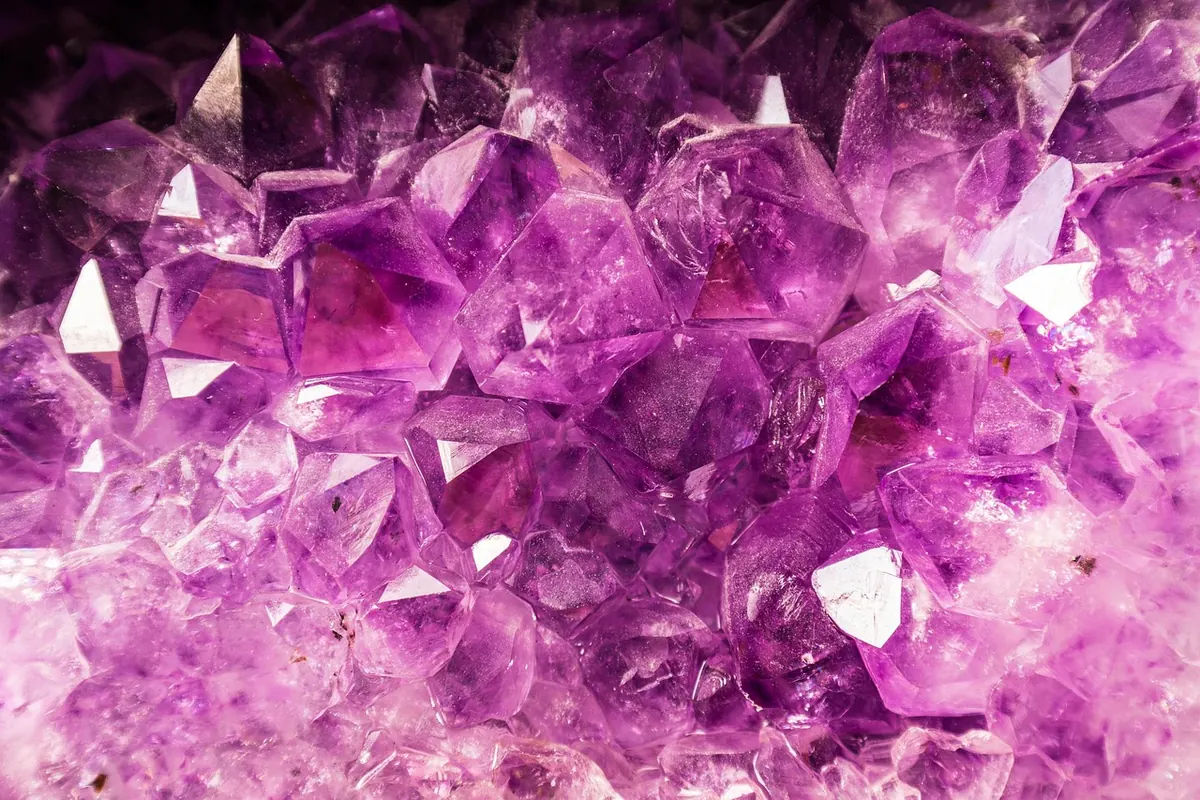
Water is fine for the tough crowd: quartz, amethyst, citrine, agate, jasper, and obsidian all tolerate a quick lukewarm wash with a single drop of mild soap. Rinse, blot, and let them dry fully. Even here, keep amethyst and rose quartz out of long sunlight, which fades the colour.
A Simple Rule Before You Reach for the Tap
Ask three questions. Is it salty, silky, or fibrous? Is it soft enough to scratch with a copper coin? Is it metallic, glued, coated, or dyed? A yes to any of those means dry cleaning only. If a piece is valuable, or you are unsure what it is, put it down and ask a gemologist or a conservator rather than experimenting on it. Candles and salt lamps belong nowhere near water at all.
The habit worth building is a small one: a dry brush and a soft cloth kept with your collection, and a note on the label of the sensitive pieces. Five seconds of caution beats a dulled malachite, a crumbling angelite, or a pyrite cluster that never quite looks right again.
Photo: 8moments / Pixabay